Become a specialist who helps people avoid burnout
A 60 academic-hour training programme for burnout-prevention specialists – a joint programme delivered by Lithuanian and international lecturers.
The first programme of its kind in Lithuania for specialists who want to understand burnout more deeply and work professionally on its prevention at the individual and organizational level.
 Ugnė Juodytė
 Michael P. Leiter
 Thomas Curran
 Kristin Neff
 Lode Godderis
 Wilmar Schaufeli
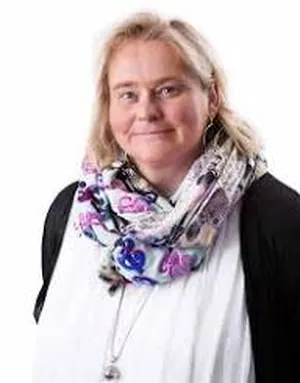 Ingibjörg Jónsdóttir
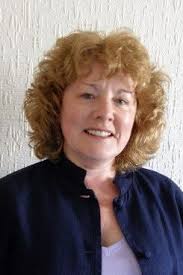 Gail Kinman
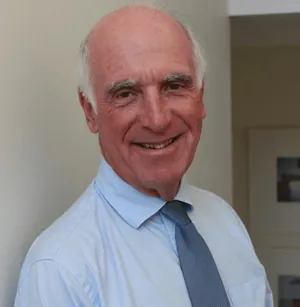 Gordon Parker
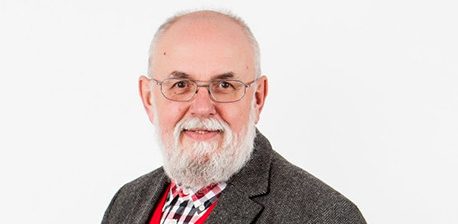 Eugenijus Laurinaitis
 Aistė Dromantaitė
 Jacques Forest
 Dr Tetyana Rocks
We will announce the rest of the team soon.
A programme for specialists working with people
The programme is for specialists who encounter stress, exhaustion, emotional depletion or burnout risk in their day-to-day work with people.
Why this programme is being created now?
There is a lack of comprehensive, evidence-based training that covers burnout prevention broadly, from the individual to the organizational level, rather than only separate, fragmented aspects.
Specialists lack tools to recognize risk factors early, both in the person and in the work environment, and to act before exhaustion sets in.
Above all, there is a shortage of the ability to see both levels: how a person can restore boundaries, sleep and body awareness, and how organizational culture, constant availability or unclear roles can either protect against burnout or fuel it.
This programme grows out of the need to prepare specialists who can build sustainable, proactive burnout prevention, not only react to exhaustion that has already happened.
Systematic learning from multiple perspectives
Burnout is examined at the individual, clinical, organizational and preventive levels.
Internationally recognized scientists and practitioners
The programme features specialists whose work shapes the modern understanding of stress, burnout, self-compassion, work culture, boundaries, perfectionism, sleep and mental health.
Wilmar Schaufeli
Professor of Work and Organizational Psychology (Utrecht University, Netherlands)
One of the most cited burnout and work engagement researchers in the world.
- 280,000+ Google Scholar citations
- Creator of UWES (Utrecht Work Engagement Scale)
- Member of the Royal Netherlands Academy of Arts and Sciences (KNAW)
If Christina Maslach gave burnout its measurable dimensions, Wilmar Schaufeli provided the counterweight – work engagement: the energetic, meaningful and absorbed connection with work that is now measured worldwide with his UWES scale. He is one of the most cited figures in work psychology, with more than 280,000 Google Scholar citations. Wilmar Schaufeli is one of the researchers who moved burnout from debates about tiredness into precise, measurable models: the instruments he created (UWES, and most recently the Burnout Assessment Tool, BAT) are now used in research and practice in dozens of countries, including Lithuania. Professor of Work and Organizational Psychology at Utrecht University, member of the Royal Netherlands Academy of Arts and Sciences (KNAW), and author of hundreds of scientific articles on burnout, work engagement and workaholism.
Michael P. Leiter
Professor of Organizational Psychology (Acadia University, Canada)
One of the foremost experts in professional burnout and work psychology.
- 174,000+ Google Scholar citations
- Canada Research Chair in Occupational Health and Wellness
- Co-creator (with C. Maslach) of the 'Areas of Worklife' model
If burnout is understood today not as personal weakness but as the result of the relationship between a person and their work environment, that is largely thanks to Michael P. Leiter. Together with Christina Maslach he created the 'Areas of Worklife' model, which made the causes of burnout visible and nameable: workload, control, reward, community, fairness and values. In this programme Michael P. Leiter teaches 'Values and burnout: when the person–work relationship loses alignment' – precisely the part of the model that is most often missed in practice. He shows how to recognise the values conflict that depletes even people who love their work, and what specifically needs to change in an organization so that people stay engaged. More than 40 years of research, 174,000+ citations, Canada Research Chair in Occupational Health and Wellness.
Prof. Gordon Parker
Emeritus Professor of Psychiatry and Scientia Professor (UNSW Sydney, Australia)
One of the world's best-known researchers in mood disorder diagnosis.
- 98,000+ citations, h-index 130
- Founder and first director of the Black Dog Institute
- Co-author of the Sydney Burnout Measure (SBM)
- Co-author of ‘Burnout: A Guide to Identifying Burnout and Pathways to Recovery’ (2023)
When burnout has to be distinguished from depression, few people in the world carry more authority than Prof. Gordon Parker. For over 50 years he has researched the diagnosis of mood disorders, and in recent years he has applied that same precision to burnout: he is co-author of the Sydney Burnout Measure (SBM) and of the book Burnout: A Guide to Identifying Burnout and Pathways to Recovery (2023). In this programme Prof. Gordon Parker teaches 'Burnout through a psychiatrist's eyes: clinical assessment, differential diagnosis and recovery pathways' – exactly what is needed in the consulting room. Clear criteria for recognising burnout, how not to confuse it with depression, anxiety or somatic conditions, and which recovery pathways genuinely work. Founder and first director of the Black Dog Institute, former Head of the UNSW School of Psychiatry and Editor-in-Chief of the Australian & New Zealand Journal of Psychiatry. 1,000+ scientific publications, 25 books, 98,000+ citations, h-index 130. Officer of the Order of Australia (2010) and Australian Mental Health Prize laureate (2020).
Kristin Neff
Professor of Educational Psychology (UT Austin, USA)
The world's pioneer of self-compassion science and bestselling author.
- 30,000+ citations, h-index 47
- Author of the Self-Compassion Scale
- Co-creator of the Mindful Self-Compassion (MSC) programme
- Author of ‘Self-Compassion’ and ‘Fierce Self-Compassion’
Kristin Neff's work proved what long seemed counter-intuitive in the helping professions: being hard on ourselves does not make us stronger – it depletes us. Self-compassion is today one of the best evidence-based protective factors against burnout, especially among doctors, psychologists and teachers. In this programme Kristin Neff teaches 'Self-compassion in the context of work stress and burnout' – not as self-soothing, but as a tool that helps a person return to work without self-blame and protects the practitioner from secondary exhaustion. You will get practices you can use both with clients and with yourself. Kristin Neff was the first in the world to define the self-compassion construct scientifically and to create the Self-Compassion Scale – one of the most widely used instruments in psychology (some 30,000 citations, h-index 47). With Chris Germer she created the international Mindful Self-Compassion (MSC) programme, taught in dozens of countries, and she is the author of the bestsellers Self-Compassion and Fierce Self-Compassion.
Thomas Curran
Professor of Social Psychology (London School of Economics)
The generational voice on perfectionism and achievement culture.
- TED talk – 3 million+ views
- ‘The Perfection Trap’ – international bestseller
- Writes for TIME and Harvard Business Review
Thomas Curran explained why burnout stopped being a problem of isolated individuals. A meta-analysis by Thomas Curran and colleagues showed that perfectionism among young adults has risen dramatically over recent decades – reshaping the conversation about why so many capable, high-striving people burn out before they ever reach their goals. In this programme Thomas Curran teaches 'Perfectionism and burnout' – how perfectionistic striving turns into exhaustion. He shows what perfectionism looks like from the inside, how to recognise it in a client who is 'just trying very hard', and how to work with it without destroying their drive to achieve. Professor of Social Psychology at the London School of Economics. His book The Perfection Trap became an international bestseller, his TED talk has over 3 million views, his work has been covered by the BBC, New York Times, CNN and Wall Street Journal, and he writes for TIME and Harvard Business Review.
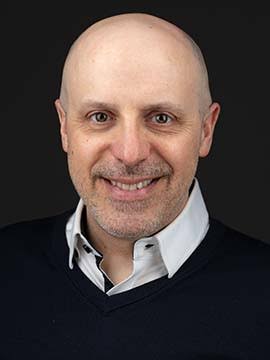
Prof. Jacques Forest
Psychologist, certified HR professional (CRHA Distinction Fellow) and professor (ESG UQAM, Montreal, Canada)
The only specialist in this field to be honoured by both professions: psychologists and HR leaders.
- Quebec Order of Psychologists professional award (2024)
- Highest title of the HR professionals order, "Distinction Fellow" (2022)
- Co-author of the Multidimensional Work Motivation Scale (MWMS) used in more than 28 languages
- 14,000+ citations, 72 articles, 20 book chapters, 820+ talks in 12 countries
Motivation is almost always at the heart of burnout: not how much a person strives, but what quality drives that striving. Jacques Forest made that distinction measurable – the Multidimensional Work Motivation Scale (MWMS) he co-created is used in more than 28 languages and reveals whether a person is moved by autonomous goals or controlled obligation. In this programme Jacques Forest teaches 'Motivation and optimal functioning: how the quality of goal pursuit protects – or depletes – a person'. The session examines how autonomous goal pursuit satisfies basic psychological needs while controlled pursuit frustrates them; how to distinguish harmonious passion from obsessive passion; when reframing goals helps and when workload or management practices need to change; and which SDT-based tools can be applied immediately in work with clients. Recipient of the Quebec Order of Psychologists professional award (2024) and the HR professionals order's 'Distinction Fellow' title (2022). Professor at ESG UQAM (Montreal, Canada), 72 scientific articles, 20 book chapters, 14,000+ citations, 820+ talks in 12 countries, co-author of 'The ABC of Work Motivation: How to Energize Any Organization'.
Ingibjörg Jonsdottir
Director of the Institute of Stress Medicine and Professor in Public Health at the Sahlgrenska Academy, University of Gothenburg
The scientist who turned burnout into a real clinical diagnosis.
- Adjunct Professor of Public Health at the Sahlgrenska Academy, University of Gothenburg, and Director of the Institute of Stress Medicine
- Research on biological aspects of burnout, stress-related exhaustion in adulthood and organizational work environment mainly in the healthcare system
- Frequently invited as a speaker, both nationally and internationally, on topics related to burnout
In Sweden, stress-related exhaustion is a distinct diagnosis with a clear protocol and a return-to-work pathway. Much of the credit belongs to the Institute of Stress Medicine in Gothenburg – one of Europe's leading centres, led by Ingibjörg Jonsdottir for many years. In this programme Ingibjörg Jonsdottir teaches 'Burnout, neuropsychology and the brain: biological and cognitive aspects of stress-related exhaustion'. Her research shows what happens to a person physically: how chronic stress affects the brain, memory, concentration and the pace of recovery. That is why exhaustion can no longer be written off as ordinary tiredness, and why recovery takes as long as it does. Professor in Public Health at the Sahlgrenska Academy, University of Gothenburg, she also studies the organizational and psychosocial work environment, particularly in healthcare. You will gain something you can rely on when explaining burnout to a client: a biological account that removes blame and restores realistic expectations about recovery.
Lode Godderis
Professor of Occupational Medicine, Head of the Environment and Occupational Hygiene Department (KU Leuven), CEO (IDEWE)
One of the most influential voices in European occupational health policy.
- CEO of IDEWE – Belgium's largest prevention organization
- Head of Environment and Occupational Hygiene at KU Leuven
- Participant in the EU ‘Ephor’ project
Little is said about how to help a person return to work after experiencing burnout. Lode Godderis is arguably Europe's strongest expert on exactly that point: his research on sustainable return-to-work has become the benchmark for organizations that want to reduce burnout systemically. In this programme Lode Godderis teaches 'Returning to work after burnout: how the organization and the person can prepare', giving a concrete sequence – what the manager does, what HR does, what the employee does, and how to prevent a second collapse in the first months. Professor of Occupational Medicine and Head of the Environment and Occupational Hygiene Department at KU Leuven, and CEO of IDEWE, Belgium's largest prevention organization, so Lode Godderis speaks from both sides: the science and real responsibility for hundreds of thousands of employees. He participates in the European Commission's 'Ephor' project and wrote How do you talk with sick employees? – about the conversation most managers avoid.
Gail Kinman
Professor of Occupational Health Psychology (Birkbeck, University of London, UK)
One of the UK's best-known occupational health psychologists.
- Chartered Psychologist
- Fellow of the Academy of Social Sciences (FAcSS) and the British Psychological Society (FBPsS)
- Member of the UK Health and Safety Executive's Advisory Group for Psychosocial Hazard Interventions (AG-PHI)
Gail Kinman works with doctors, teachers, social workers, law enforcement and people in other professions. Her research and practice focus on improving working conditions and wellbeing – not individual advice to 'relax more', but systemic measures that work at organizational level. In this programme Gail Kinman teaches 'Boundaries, work–life balance and burnout prevention: what individuals can manage and what organisations must change'. It answers the question: where individual responsibility for boundaries ends and organizational structure begins – remote and hybrid work, constant availability, working while unwell. Gail Kinman works closely with the Society of Occupational Medicine, chairs its Special Interest Group in Work and Health Psychology, regularly contributes expertise to UK government policy and is a member of the Health and Safety Executive's Advisory Group for Psychosocial Hazard Interventions (AG-PHI). A Chartered Psychologist, Fellow of the Academy of Social Sciences (FAcSS) and of the British Psychological Society (FBPsS), and author of several books.
Prof. Eugenijus Laurinaitis
Psychiatrist, psychotherapist, group therapist, Associate Professor at Vilnius University, Professor at Mykolas Romeris University
One of the first in Lithuania to speak publicly about burnout.
- President of the Lithuanian Psychotherapy Society
- President of the European Association for Psychotherapy (EAP), 2013–2015
- Member of the World Council of Psychotherapy Executive Committee (2015)
- Psychotherapy teacher, lecturer and group therapist
Prof. Eugenijus Laurinaitis was one of the first people in Lithuania to speak publicly about burnout – at a time when most still called it 'tiredness' or a matter of character. For more than four decades he has worked with the hardest cases of exhaustion, depression and personality difficulties. In this programme Prof. Eugenijus Laurinaitis teaches two topics. The first opens the programme: historical perspectives on burnout research and its real causes. The second is therapeutic work with burnout: case formulation, stabilisation and recovery without blaming the individual. A psychiatrist, psychotherapist and group therapist, Associate Professor at Vilnius University and Professor at Mykolas Romeris University, he has trained and supervised a large share of the country's psychotherapists. President of the Lithuanian Psychotherapy Society, President of the European Association for Psychotherapy (EAP) (2013–2015) and its General Secretary (2017), and a member of the World Council of Psychotherapy Executive Committee (2015).
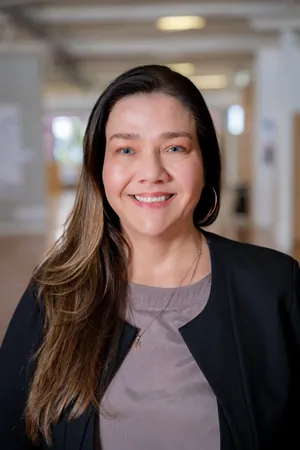
Dr Tetyana Rocks, APD
Dietitian, researcher and education leader in nutritional psychiatry (Deakin University, Australia); Senior Research Fellow, Food & Mood Centre, Director of the Food & Mood Academy
Translates the evidence on diet and mental health into practice for professionals worldwide.
- Director of the Food & Mood Academy, Deakin University
- 56 scientific publications and 2,700+ citations
- Developer and lead educator of the international Food and Mood course, reaching more than 95,000 learners worldwide
- Developer and lead educator of two accredited CPD courses: Nutri Psyche and Life and Mind
Dr Tetyana Rocks is a dietitian, researcher, and education leader in nutritional psychiatry at Deakin University, Australia. She is Director of the Food & Mood Academy, where she leads the translation of emerging evidence on diet and mental health into professional education, clinical practice and accessible learning for health professionals and communities internationally. Her work sits at the intersection of research, education, and implementation. Her research spans dietary interventions for depression and anxiety, the microbiota–gut–brain axis, ultra-processed foods and mental health, and gastrointestinal health in eating disorders. In 2025, together with colleagues, she published practical recommendations to support the use of dietary interventions in the treatment of depression. A major focus of Tetyana's leadership is building the capacity of health professionals and the broader community to understand and apply nutritional psychiatry evidence. She is the developer and lead educator of the international course Food and Mood: Improving Mental Health Through Diet, which has reached more than 95,000 learners through FutureLearn, and she leads a broader portfolio of professional education and knowledge-translation initiatives through the Food & Mood Academy. In our programme, Tetyana will draw on her experience across research, clinical translation and professional education to discuss which nutrition recommendations are currently supported by sufficiently strong evidence, where uncertainty remains, and how clinicians can recognise when referral to a dietitian or physician is appropriate.
Ugnė Juodytė
Psychologist, burnout prevention specialist, author of ‘Anatomy of Burnout’
Programme author.
- 20+ years of psychology practice
- Author of ‘Anatomy of Burnout’
- Speaker at Lithuanian and international conferences
A decade ago Ugnė Juodytė burned out herself – working non-stop and sleeping four hours a night, until she realised it was not a superpower but a very high price. That experience, combined with scientific research and real client stories, became the book Anatomy of Burnout (Alma littera, 2026) and its seven-step programme. Ugnė Juodytė is the author of this programme: she designed the full 60 academic-hour curriculum, brought Lithuanian and international lecturers into one programme, and moderates the live sessions so that every topic ends with concrete tools for client work. For more than 13 years she has worked in psychology, combining Gestalt psychotherapy practice, cognitive behavioural therapy studies and coaching. She consults individuals and organizations, leads training for management teams, and is a member of the Lithuanian Psychologists' Union, the Lithuanian Trauma Association and the Lithuanian Mindfulness-Based Psychology Association.
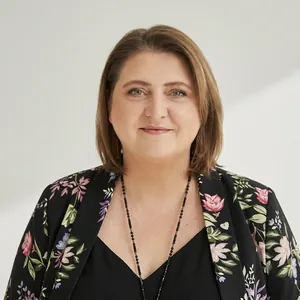
Dr. Aistė Dromantaitė
PhD in Social Sciences, MRU lecturer and researcher, organizational consultant
The union of science, coaching and psychotherapy with international recognition.
- Lecturer and researcher at Mykolas Romeris University
- Publications in international peer-reviewed journals
- 2021 CoachAwards nominee in career coaching
- 2017–2019 President of ICF Lithuania
Dr. Aistė Dromantaitė works exactly where burnout prevention stops being an individual's responsibility and becomes an organizational decision: with leaders, team culture and the leadership habits that either protect people or drain them. In this programme Dr. Aistė Dromantaitė teaches 'Coaching work with burnout' – how to recognise exhaustion in a coaching conversation, when coaching helps and when a person needs therapy or medical care, and which questions and interventions work with a burned-out leader or professional. A licensed psychotherapist and ACC-accredited coach, she bridges both professions. Since 2007 she has taught and worked as a researcher at Mykolas Romeris University, focusing on coaching, organizational behaviour and leadership, and publishing in international peer-reviewed journals. In 2021 she was nominated for the international CoachAwards in the career coaching category among 20 specialists worldwide, and from 2017 to 2019 she led ICF Lithuania.
If you want to learn from these lecturers and deepen your burnout-prevention expertise, apply to the programme.
Who stands behind the programme
The programme is created, coordinated and supervised by an experienced team of specialists.
Ugnė Juodytė
Programme author and organizer
Psychologist, lecturer and author of ‘Anatomija of Burnout’. For more than 13 years she has worked with exhausted and burnt-out people and with organisations building healthier work cultures.
Prof. Eugenijus Laurinaitis
Scientific supervisor of the programme
Psychiatrist, psychotherapist, group therapist, Associate Professor at Vilnius University and Professor at Mykolas Romeris University. One of the first in Lithuania to speak publicly about burnout and its clinical diagnosis.
Prof. Dr. Aistė Dromantaitė
ICF accreditation and quality coordinator
Professor at Mykolas Romeris University, researcher and expert in coaching and leadership development. She ensures the programme content meets the highest quality and ICF requirements.
Preliminary programme structure
Historical perspectives on burnout research and practice, causes, and how burnout is ‘diagnosed’.
Lecturer: Prof. Eugenijus Laurinaitis
Burnout, neuropsychology and the brain: biological and cognitive aspects of stress-related exhaustion.
Lecturer: Ingibjörg Jonsdottir
This session will cover: the neurobiological and neuropsychological dimensions of chronic stress and burnout; what is currently known about brain functioning, cognition, recovery and stress-related exhaustion; how biological mechanisms and psychological processes interact in the development and maintenance of burnout; how this knowledge can be used in prevention work and clinical understanding; practical tools, methods and immediately usable ways of translating this knowledge into psychoeducation and supportive work with people experiencing chronic stress or burnout.
Returning to work after burnout: how the organization and the person can prepare.
Lecturer: Lode Godderis
This session will cover: what a responsible and sustainable return-to-work process after burnout should look like; how organisations can prepare for an employee's return in a way that reduces the risk of relapse; what kind of preparation, pacing, communication, and support may be needed from the individual returning to work; how managers, HR professionals, occupational health professionals, and mental health practitioners can work together more effectively in this process; practical tools, frameworks, and immediately usable steps that participants could directly apply in their work with organisations and with individuals returning after burnout.
Self-compassion in the context of work stress and burnout.
Lecturer: Kristin Neff
This session will cover: what self-compassion is and is not – the three core components (self-kindness, common humanity, mindfulness) and how self-compassion differs from self-esteem, which depends on achievement and comparison with others; what the research shows about self-compassion, work stress, empathic distress and burnout, particularly in the helping professions; the place of fierce self-compassion – boundaries, saying no and protecting oneself at work; at least three practices participants can use themselves and with clients.
Values and burnout: when the person–work relationship loses alignment.
Lecturer: Michael P. Leiter
This session will explore: how values relate to the development of burnout and to recovery; how misalignment between personal and organisational values can contribute to exhaustion, cynicism and the loss of professional meaning; how value incongruence shows up in practice, both in individual experience and in workplace culture; how professionals can work with these questions in a way that is conceptually clear and practically useful; practical tools, frameworks and immediately usable ways of helping people and organisations reflect on values, restore alignment where possible, and recognise when deeper change is needed.
Motivation and optimal functioning: how the quality of goal pursuit protects – or depletes – a person.
Lecturer: Prof. Jacques Forest
This session will explore: why it is not the presence of goals but the quality of motivation – autonomous versus controlled – that determines whether goal pursuit sustains or depletes a person; how autonomous pursuit satisfies basic psychological needs while controlled pursuit frustrates them; how to distinguish harmonious passion from obsessive passion; how goal conflict, over-ambitious striving and constant 'more' become sources of exhaustion; when reframing goals helps and when workload or management practices are the real issue; practical SDT-based tools and questionnaires that can be used immediately in practice.
Perfectionism and burnout: based on Thomas Curran's work – how perfectionistic striving, especially among high achievers, turns into exhaustion.
Lecturer: Thomas Curran
This session will explore: how perfectionism contributes to burnout risk; how socially prescribed perfectionism, self-pressure, and chronic performance demands affect emotional wellbeing and functioning; how perfectionism appears both at the individual level and within organisational cultures; how professionals can distinguish healthy ambition from perfectionistic patterns that drive exhaustion, shame, and overwork; practical tools, frameworks, and immediately usable ways of working with perfectionism that participants could apply both for themselves and in work with clients and organisations.
Self-confidence, self-worth and burnout: how fragile self-worth can increase burnout risk.
Boundaries, Work–Life Balance, and Burnout Prevention: What Individuals Can Manage and What Organisations Must Change.
Lecturer: Gail Kinman
In this session we will explore: what burnout is, how it develops and its wide-ranging effects on individuals, teams and organisations; occupational, organisational and individual risk factors for developing and sustaining burnout, with a particular focus on workload, work intensity, role clarity, control and expectations of availability outside working hours; emotional demands, emotional labour and emotional boundary challenges (particularly in caring and helping professions) and their implications for burnout; how digital working, remote and hybrid working, expectations of availability and an ‘always-on’ culture can contribute to chronic work demands, blurred boundaries and inadequate opportunities for recovery; how stigma, psychological safety and organisational culture influence people’s willingness to speak up, set limits and seek support; how professionals can work constructively with employees, leaders and organisations to identify and address the underlying drivers of burnout, without placing primary responsibility for prevention on the individual.
Nutrition and burnout: how diet can influence stress resilience, mental health and burnout risk.
Lecturer: Dr Tetyana Rocks
This session will explore: the evidence linking overall diet quality with mental health and stress-related difficulties; the potential roles of inflammation, the gut-brain axis, and nutritional deficiencies; how chronic stress and exhaustion may affect appetite, eating patterns, and food choices; which nutrition-related recommendations are supported by sufficiently strong evidence; common claims about diets or supplements for which the evidence remains limited; what burnout prevention professionals may responsibly discuss with clients, and when referral to a dietitian, physician, or another healthcare professional is appropriate.
Physical activity, movement and burnout: how movement can support prevention and recovery.
Sleep and burnout: how sleep and circadian health affect stress, functioning and recovery.
Burnout at the organizational level: how organizations can recognize, address and prevent it.
Lecturer: Wilmar Schaufeli
This session will explore: how burnout can be understood not only as individual exhaustion but also as an organizational-level phenomenon; which work-environment factors systematically increase burnout risk and how to recognize them; how organizations can do more than react to burnout after it happens by acting preventively – changing working conditions, management practices and work culture; which evidence-based steps can be taken immediately and which require longer systemic change; practical tools and frameworks that participants can apply when working with organizations and leaders.
Trauma, secondary trauma and burnout.
Burnout through a psychiatrist's eyes: clinical assessment, differential diagnosis and recovery pathways.
Lecturer: Prof. Gordon Parker
How a psychiatrist assesses a person who comes because of exhaustion: what is asked, what is observed and in what order. The session discusses where the distinction between burnout and clinical depression works in practice and where it becomes complicated, how pure and comorbid cases differ, what a non-medical specialist can reasonably assess, what should not be interpreted, and which signs mean that waiting is no longer possible. It also covers how to formulate a referral so that a doctor takes it seriously, and what research shows about recovery duration and what actually helps.
Therapeutic Work with Burnout: Case Formulation, Stabilisation, and Recovery Without Blaming the Individual.
Lecturer: Prof. Eugenijus Laurinaitis
Coaching when working with burnout: method possibilities, professional decisions and the three-party contract.
Lecturer: Dr. Aistė Dromantaitė, ACC
In this session we will explore: how coaching differs from consulting, mentoring and psychotherapy, and when it is suitable for burnout risk; what the coaching process looks like in practice, from contracting to maintaining the client's responsibility; why the goal of quickly 'restoring productivity' is not always appropriate when exhaustion is present; how a specialist can recognise competence boundaries and decide whether to continue, collaborate or refer; what a three-party contract is when an organisation funds the service, and how confidentiality, goals and information sharing are balanced. About the lecturer. Dr. Aistė Dromantaitė, ACC, is a Doctor of Social Sciences, psychotherapist, ICF-certified coach and lecturer at Mykolas Romeris University. Her experience in psychotherapy, coaching and organisational work lets her examine burnout from inner processes to work environment influences.
How to present yourself as a burnout-prevention specialist?
Work ethics.
Feedback and exam preparation.
Final exam.
This is a test designed to help you review the key points covered throughout the programme.
Topics and the list of lecturers may be adjusted as some international lecturers are still being confirmed.
Practice groups
Participants will be divided into small practice groups. Approximately once a month the groups will meet online to practise what was covered in the lectures.
Exercises
In the groups you will try out the exercises presented in the lectures – in a safe setting, among peers, before applying them with clients.
Tests and tools
You will gain hands-on experience with burnout assessment tools and instruments – how to use them, interpret them and discuss the results.
Protocols for client work
You will learn to apply intervention protocols in real work with clients – from the first conversation to lasting change.
Format and language
The entire programme is delivered online in live sessions. Most lectures are in the evenings at 18:00, a few in the morning (9:00 and 10:00 Lithuanian time). In every live session participants can ask international lecturers questions and receive answers in real time. Most lectures are in English, so all recordings will include Lithuanian subtitles and be uploaded within 72 hours after each session.
Practice and a ready-made toolkit
By the end you will have a ready-made toolkit – questionnaires, assessment protocols, conversation structures, client worksheets and templates for training organizations – that you can put to work immediately.
Exercises, tests and clear criteria
You will receive exercises, validated tests and step-by-step action sequences you can apply practically in your work. Alongside your intuition you will have clear tools and criteria to work with the person – not relying on gut feeling alone.
Community of specialists
The programme brings together a community of specialists working in burnout prevention and burnout syndrome: psychologists, psychotherapists, doctors, coaching and HR professionals. Participation gives access to a closed space for sharing cases, literature and tools, discussing complex client situations and building a lasting peer support and referral network that continues after the programme.
Early-bird price
The €1900 price applies to the first 15 participants. After that €2600.
ICF-accredited programme: 16 live online sessions with international scientists and practitioners. 60 academic hours, live Q&A, recordings with Lithuanian subtitles, a programme completion certificate and continuing-education academic hours.
- All lecture cycles (60 academic hours)
- Live online sessions with Q&A
- Recordings with Lithuanian subtitles
- Programme completion + ICF certificate
- Trainings with international faculty
- Toolkit: templates, protocols, worksheets
- Exercises, tests and action sequences for working with clients
- Community of specialists and peer support
- ICF coaching academic-hours recognition
- Academic hours logged in the METAS system
- Only for those who need formal academic-hour recognition
No risk: money-back guarantee
If after the first two sessions you decide the programme isn't for you, we'll refund the full amount with no questions asked. We want you to feel confident investing in your professional growth.
Option to pay in instalments
If it suits you better, you don't have to pay the full amount at once – the programme can be paid in instalments. You'll see the exact schedule during registration.
The €1900 price applies to the first 15 participants. After that €2600.
Your seat is reserved immediately after payment. Money-back guarantee after the first 2 sessions.
Prefer to apply and talk first?
5% of the profit from this programme will be donated to the Niekieno vaikai project, which cares for children left without guardianship.
Three steps to joining the programme
Registration is simple and instant – no selection, no extra forms, no waiting. You secure your spot in a few minutes.
Fill in the contract online
A short form with your details, payment option (in full or in instalments) and an e-signature. Takes about 5 minutes.
You receive an invoice by email
After signing, we email you a copy of the signed contract, and our administrator prepares and sends the invoice according to your chosen payment option.
Pay by bank transfer
You pay the invoice by bank transfer – in full or in instalments according to the schedule in the contract.
Get access to the training portal
You receive a link to your private training portal with the schedule, materials and recordings.
Seats are limited – the early-bird price applies only to the first 15 participants.
Contract signed online · Payment by bank transfer against an invoice · Questions? juodyte.ugne@gmail.com
For preparation: worth reading
Where to learn to work with burnout in Lithuania
A map of competences: where this programme sits between university studies, psychotherapy schools and seminars.
How burnout differs from depression and anxiety
Differential assessment is a separate session in the programme, so it helps to arrive with the basics.
Stages of burnout
The logic of stages runs through all the practical client-case tasks in the programme.
How long burnout recovery takes
Realistic recovery timelines help you plan client work and talk to the client's employer.
Burnout training for organisations
The organisational level is one part of the programme, relevant when working with teams and managers.
Frequently asked questions
If you want to work with burnout professionally rather than intuitively – apply now.
This is a programme for specialists who don't want to repeat generic phrases about stress but to understand what really happens in a person, in the organization and in their relationship when work starts to drain them.
Who curates the programme
This programme is born from personal experience and the conviction that Lithuania needs specialists who can work on burnout more seriously, precisely and responsibly.
Ugnė Juodytė
Psychologist, author of "Anatomy of Burnout". Responsible for all programme content and implementation.
„I'm creating this programme because I see how many specialists work with exhausted people without a clear method. I've been consulting people affected by burnout for over 20 years, and I see that help becomes more effective when the specialist sees not only the person but the system they live in. I want Lithuania to have specialists who can work on this topic more seriously, precisely and responsibly."
Dr. Aistė Dromantaitė
PhD in Social Sciences, licensed psychotherapist. Responsible for coaching specialists' accreditation academic hours.
„This programme matters to me because burnout often remains invisible – especially when a person looks "successful". I've worked with people and organizations for over 15 years, and I see that change is possible only when a specialist has both a scientific foundation and the courage to talk about what is really happening. This programme is built for those who want both."